
Protagonists
- Clement Scheidegger - FOC Representative, Mountaineer (Michalis)
- Narinder “Nari” Sodhi - Natural Sciences Student (Ioannis)
- Mauricio Duarte - Geology/Metallurgy Student (Istvan)
- Susan Chen - History Student (Konstantina)
- Father Ludovick Cloutier - Catholic Priest, Religion Lecturer (Tasos)
The Road to Cobb’s Corners
“I’ve been climbing hills, mountains, cliffsides for almost forty years now. And look at me — I’m still in one piece.”
— Clement Scheidegger, to a young metallurgist on the long road north
Summary
On August 15th, 1930, ten students and two chaperones departed Miskatonic University for the backwoods of Vermont, bound for a second attempt at researching the folklore and geology of the Cobb’s Corners region. Their leader — Robert Blaine, sole survivor of the previous year’s tragedy — seemed eager, perhaps too eager, to return. By the time the convoy pulled up to the abandoned Maclearan farmhouse that afternoon, the cracks were already showing: a man hiding bottles behind closed doors, a strange boy digging up something unholy in the woods, and a flower bed that had no business being so alive.
- The expedition marks the second year of Miskatonic University’s research in Cobb’s Corners, funded by Federated Oil and Chemical.
- The previous year, four students returned to finish their research; only Robert Blaine survived — and only because he broke his arm the night before departure.
- Boyd Patterson was found dead at the foot of the Green Mountains; Daphne Devine and John Jeffrey were never found.
- Clement Scheidegger, FOC representative, is secretly searching for pasquallium — a revolutionary superconductive mineral discovered by Victor Pasqualle before he vanished in the Vermont hills.
- Robert Blaine claimed the only real bed in the farmhouse, closed himself in the parlor, and was discovered hiding bottles; he admitted to taking cocaine for a cough.
- Nari discovered Jason Trent secretly digging up mandrake roots in the sugar maple forest — the boy fled in terror when he realized he had been seen.
- A flower bed behind the abandoned Maclearan farmhouse was in full, vibrant bloom, impossibly well-tended for a house where no one was supposed to live.
- Blaine announced a trip to Jim’s Grill in Cobb’s Corners for a late lunch — the expedition’s first encounter with the town itself.
Before Dawn
The sky over Arkham was still dark when the first of them arrived on South West Street. Clement Scheidegger stood outside Derby Hall in the grey pre-dawn, his Alpenstock across his shoulders, stretching his arms and bending his knees in the slow, methodical routine of a man who had spent forty years in the mountains. His neatly combed hair was grey at the temples. His moustache was clipped and precise. He looked, to the few students passing by, like someone’s father — which was precisely how the university regarded him. Federated Oil and Chemical had sent him here to keep an eye on their investment — and to pursue something far more valuable.
What Clement knew, and what the students did not, was that FOC had lost a man in these hills. Victor Pasqualle, a company geologist, had been surveying the Vermont mountains for mineral resources when he stumbled upon something extraordinary: an ore that yielded a metal unlike anything in the scientific literature. They called it pasquallium, after its discoverer. It was harder than diamond. It melted at temperatures that exceeded tungsten by thousands of degrees. And most remarkable of all, it was a superconductor at room temperature — zero electrical resistance at seventy-five degrees Fahrenheit, a property no known metal possessed. The applications were staggering: magnetic trains, rust-proof armour, free energy. It could change the world, or at the very least, make FOC’s reclusive founder, Michael Abelard, the richest man alive.
Pasqualle had sent a sample back to Miskatonic University for analysis — that was how Professor Learmonth had gotten involved — and then, somewhere in the Green Mountains, he had vanished. No body. No note. No second sample. FOC had sent people to look for him. They found nothing. Now Clement was here, riding shotgun on a student expedition, to find the ore’s exact location and, if possible, to find out what had happened to Victor Pasqualle. The fact that Learmonth had brokered FOC’s sponsorship of the entire trip made Clement’s presence convenient. It also made him the only person in the convoy who knew that the real reason they were heading into the Vermont hills had nothing to do with Abenaki folklore.
One by one, the others trickled in. Mauricio Duarte, barely twenty, arrived in his American football sweater with the eager restlessness of a kid who couldn’t decide between metallurgy and the gridiron. His FOC scholarship had brought him to Miskatonic, and Professor Learmonth’s geology department had kept him busy ever since. Susan Chen showed up with jars of pickled chicken feet clinking in her suitcase, sent from Boston by her family’s restaurant. Father Ludovick Cloutier, the French-Canadian priest who taught religion in the School of Natural and Revealed Religion, arrived with his rosary already in hand — Professor Harrold had asked him personally to accompany the students, and the weight of that request sat visibly on his shoulders.
And then there was Narinder Sodhi — Nari, as she preferred — who came late, having finished her morning prayer and yoga. She was a young Sikh woman from Punjab, her father’s daughter in every way that mattered to the biology department, where Professor Sodhi held court. She wore a blend of traditional Indian dress and modern American fashion, and she kept her left hand gloved. Three fingers were missing, taken by a tiger when she was a child in India. She never spoke of it unless asked, and even then, only briefly.
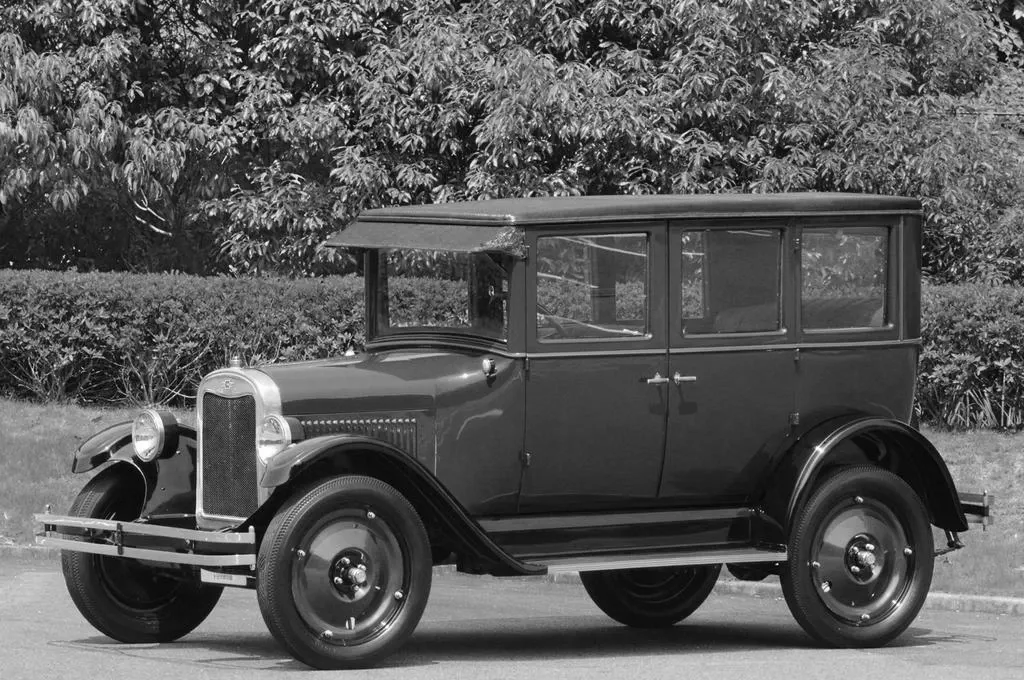
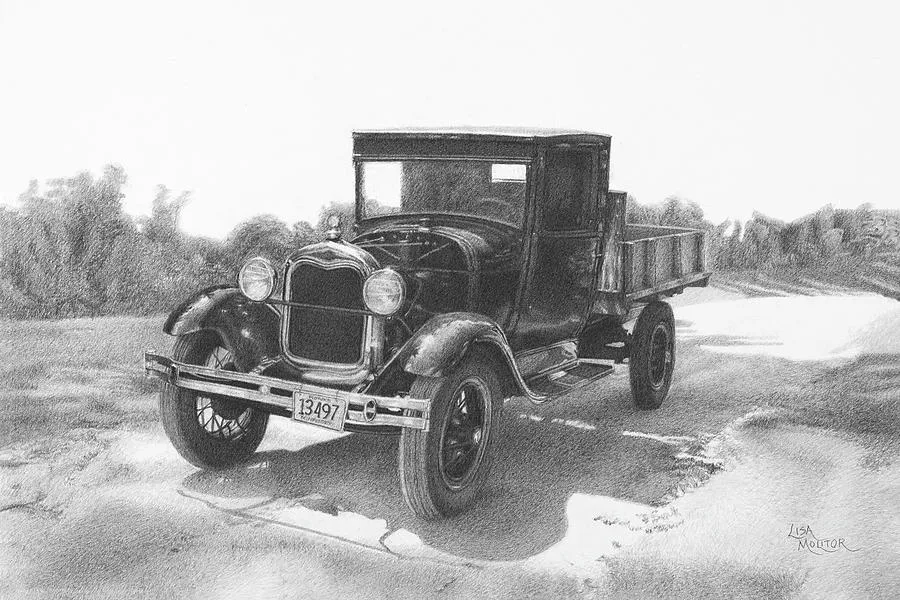
Three vehicles waited on the street: two Chevrolet Model Ks and a lumbering Ford AA truck piled high with luggage, surveying gear, and the tools of two very different kinds of research.
The story was by now campus legend. In the summer of 1929, Professor Roger Harrold had organized student teams to catalogue the folklore of Vermont — the Abenaki legends, the settler tales, the things old farmers muttered about when the light was right. Professor Ashley Learmonth, seeing an opportunity, had secured funding from Federated Oil and Chemical in exchange for sending geology students along to survey the land — and, not coincidentally, to keep searching for the mineral that Victor Pasqualle had found before he disappeared. One team had been particularly successful. Led by Daphne Devine — Harrold’s star pupil, brilliant and driven — they had gathered enough material to convince the professor to let them return for a second visit. Four students went back to Cobb’s Corners that August. Only Robert Blaine survived, and only because he had fallen down a flight of stairs the night before departure and broken his arm.
Boyd Patterson’s body was found at the foot of the Green Mountains, broken and mangled by a long fall. Daphne Devine and John Jeffrey were never found at all. Not a trace. Not a button. Not a footprint.
Blaine had spent the months since then in a slow, spiralling grief. There were rumours about drinking, about a sudden withdrawal from the sports teams and social circles he had once dominated. And yet here he was, volunteering to lead a new expedition back to the same hills that had swallowed his friends whole.
The Convoy Assembles
More students arrived, filling out the roster of the doomed and the oblivious. Clarissa Thurber, an attractive young chemistry major with a GPA of 3.8 and a father who thought university was no place for a woman. Roderick “Little Rod” Block, a mountain of a football player from Georgia with a U-shaped scar on his chin and an easy smile. Louis Gibbons, the charming botanist who played piano at the Regatta and hid the fact that his father had cut off his tuition. Harry Higgins, the Irish geologist with the singing voice and the quick laugh — and, though few knew it, a blood connection to Danny O’Bannion’s Arkham mob. Terrence Laslow, insufferable scion of New York wealth, double-majoring in history and psychology, with a face like a pale rat and a mouth to match. William Noakes, the local Arkham boy who still checked his father’s pocket watch a dozen times a day. And Jason Trent — strange, silent Jason Trent — who nobody knew and nobody spoke to, who carried books with titles that made people uncomfortable and who had signed up for this trip only because his grades had slipped and he needed the credit.
Robert Blaine arrived last. He was a good-looking man, twenty-four, with a lean, muscular build and a way of wearing plain brown and grey clothes that made them look like a uniform. He did not smile so much as deliver sardonic comments with the faintest curl of the lip. There was something behind his eyes — a tightness, a constant calculation. He looked at the gathered students and greeted them all warmly, but his gaze kept drifting. Always drifting. To one person in particular, though none of them could quite tell who.
He announced the plan. The expedition would be split into two groups: the geologists, archaeologists, and what he called “workers in the soil” would form Group One, conducting surveys with tools provided by FOC. A local man named Joe Harlow would drive them each morning to the work site. Group Two — the anthropologists, historians, and folklorists — would interview locals, equipped with notepads, a camera, and a phonograph. Clement received a meaningful look at the mention of FOC’s sponsorship.
The vehicles were divided. William Noakes took the wheel of one Chevrolet, with Susan, Clarissa, Gibbons, and Blaine piling in. Father Cloutier drove the other, carrying Nari, Laslow, Roderick Block, and Higgins. Clement took the Ford AA truck, with Mauricio riding shotgun and Jason Trent seated in the back among the crates and suitcases, a thick book held inches from his face.
At seven in the morning, the convoy rolled out of Arkham.
Existing Relationships
- Clement Scheidegger — Recognized Harry Higgins around the geology department. Connected to Professor Learmonth through FOC. Had seen Mauricio Duarte in Learmonth’s orbit; the boy held a FOC scholarship.
- Narinder Sodhi — Close friends with Clarissa Thurber, bonded as two of the few women in the sciences. Quietly did Louis Gibbons’ homework so he could play piano at the Regatta. Had attended Father Cloutier’s religion lectures out of spiritual curiosity. Seen Mauricio Duarte in biology lectures; they had shared a project or two.
- Mauricio Duarte — Knew Roderick Block from the football field. Crossed paths with Harry Higgins through the geology department. Had shared courses with John Jeffrey, the geology student who vanished last year. Met Robert Blaine a handful of times through sports. Heard the campus gossip that Blaine was in love with Daphne Devine.
- Susan Chen — Knew Jason Trent by reputation from the history department — the witchcraft obsession, the strange books. Familiar with William Noakes and Terrence Laslow as fellow students of history and the humanities. Had known Boyd Patterson (found dead last year) as a fellow history student, and Daphne Devine by reputation as Harrold’s star pupil — perhaps with a touch of jealousy. Heard the same gossip about Blaine and Daphne.
- Father Ludovick Cloutier — Knew almost none of the students by name. A few faces from his religion lectures were familiar. His real connection was to Professor Harrold, who had asked him personally to chaperone the expedition.
The Long Road North
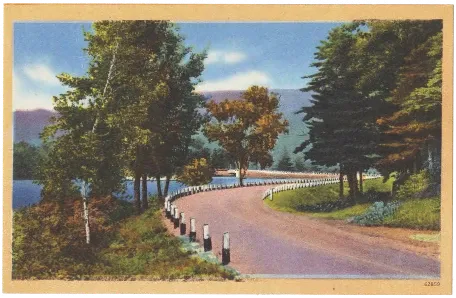
The drive north from Arkham took the better part of the day. The farmland of Massachusetts gave way to the wooded hills of New England, and the road narrowed as they climbed into Vermont. Covered bridges appeared without warning, spanning dark creeks, and the air grew cooler and cleaner — or at least it did until they passed a stretch of fertilized farmland and the smell of manure flooded Father Cloutier’s car. Laslow, who had been sitting with the window cracked open, pulled his head outside like a dog, then shot a withering glare at Nari as though the smell were somehow her fault.
Muttered something about Indians. About how they smell. About what they eat.
Higgins, in the front seat, wasn’t smiling. That alone said something.
Nari felt the words land, and they landed harder than Laslow could have known. Her Sikh faith demanded equality — the rejection of caste, of hierarchy, of the very idea that one person was worth more than another. Laslow’s disdain wasn’t merely rude. It was an affront to everything she believed. She said nothing, but her jaw tightened, and she turned to Father Cloutier and asked, with deliberate calm, about his course on religion. The priest, sensing the shift in the air, answered warmly. Nari mentioned her own spirituality, her interest in theology. It helped. A little.
In the truck, Clement and Mauricio fell into an easy rhythm. They shared a connection through FOC and through Professor Learmonth, and Clement — who had been in Arkham long enough now to feel halfway at home — spoke about his years in the mountains. Forty years of climbing hills, cliffsides, and glaciers. His voice was calm and sure. He did not mention Pasqualle. He did not mention the mineral that could reshape the modern world, or the fact that somewhere in these green, folding hills, a man had walked into the mountains and never come back. That was FOC business. It would keep until they arrived.
Mauricio, in turn, told the story of his uncle, killed in a mining accident when Mauricio was nine. How his father, after that loss, had started making every decision by flipping a coin. Heads or tails. Even the decision to send Mauricio to Miskatonic had come down to a flip. The young Brazilian had adopted the habit himself — it takes the burden of choosing off your shoulders, he said. Clement raised an eyebrow but said nothing.
Behind them, ignored, Jason Trent turned the pages of his book. His thick glasses caught the light. He did not speak.
In the lead car, Blaine sat pressed against Clarissa Thurber. He was attentive to the point of suffocation — telling her she was beautiful, that he hoped the trip would be perfect for her, that everything had been arranged with her comfort in mind. To a casual observer, it looked like infatuation. But there was something off about it.
Susan, sitting up front with Noakes, tried to lighten the mood. She brought out her jars of pickled chicken feet and offered them around. The reaction was immediate. Gibbons pretended not to hear. Blaine didn’t look away from Clarissa. And Clarissa — sweet, overachieving Clarissa, who had fought her father for the right to be here — opened a book and held it upside down, pretending to read until the moment passed.
The Maclearan Farmhouse
Around half past one in the afternoon, the convoy turned off the main road and bounced along a rutted track toward the Maclearan farmhouse. It stood three miles outside Cobb’s Corners, a two-story eyesore surrounded by thigh-high grass and backed by a dense sugar maple forest that stretched into the green darkness of the Vermont hills.
The house was abandoned — officially. But it didn’t feel abandoned. The windows were intact. The floors were dusty but not filthy. Few broken chairs sat facing a brick fireplace where cold black ashes lay as though someone had tended them recently. On the kitchen wall, above a handpump sink, a faded yellow and blue plaque read: “God bless our happy home.”
Something about those words, in that house, at the edge of those woods, felt wrong.
Blaine gathered everyone and laid down the law. Today was for settling in. No interviews, no digging, no exploring. He was responsible for their safety, and he would be watching. If anyone wanted to head off alone, they had better have a very good reason. Then he showed them the rooms: the two bedrooms upstairs for the women, the front room downstairs for the men, and the parlor — with the only real bed — for himself.
That last part did not sit well.
Father Cloutier went to speak with Blaine behind the closed parlor door. The conversation was brief. Through the door, Clement could hear the priest’s measured tone, and then Blaine’s deflections — his injured arm, his doctor’s orders, his left-side sleeping requirement, his authority as team leader. But when the door opened, Father Cloutier’s face said something his words did not. He had seen Blaine hiding something in his suitcase. Something that clinked. Something in a bottle. And when the priest had pressed him about mixing substances, Blaine had mentioned, with a strange casualness, that he took cocaine for a cough.
Clement sighed. “He’s a brat. He won’t leave his room.”
Laslow, meanwhile, had produced a luxurious mattress from his luggage and announced that he would not — would absolutely not — sleep on the floor. His clothes would wrinkle. His dignity would suffer. Clement, who was paying for this expedition through FOC, reminded himself that some battles were not worth fighting. Not yet.
Upstairs, the women negotiated their own uneasy peace. Clarissa was adamant: her father could not find out she had slept on the same floor as men. In the end, she and Nari agreed to share one room, and Susan — who didn’t mind the solitude — took the other for herself. Susan had her chicken feet and her jars. Clarissa had her books, held right-side up now. Nari, who had grown up sleeping on the floor in Punjab, would have been fine either way. It would do.
The Flower Bed and the Forest
While the others unpacked and argued over mattresses, Nari slipped outside with her sketchbook. She found a spot by the flower bed behind the house — a strange, vibrant patch of violets, daisies, buttercups, and lilacs that was in full, riotous bloom despite the abandoned state of everything around it. The flowers were beautifully tended. Weeded. Watered. Someone was taking care of this garden.
She sat down to sketch, and that was when she noticed the figure moving among the sugar maples.
It was Jason Trent. He was alone, picking his way through the trees with his head down, searching the ground. Nari followed at a distance, her curiosity overcoming her caution. Trent knelt at the base of a tree, reached down, and began to dig at something in the earth with his fingers. Then he looked up and saw her.
The boy’s face went white. He stood, brushed his pants, and ran. Not walked — ran, back toward the farmhouse, without a word, without even a goodbye, clutching something behind his back that might have been a rock.
Nari waited until he was gone, then went to the spot where he had knelt.
The earth was freshly disturbed. She reached down and pulled up a root — gnarled, pale, and twisted into a shape that looked disturbingly human. A mandrake root. Mandragora. Used in witchcraft. Used in potions. Toxic to the touch and worse to ingest. And Jason Trent, the boy nobody talked to, the boy who carried books about witch trials and refused to speak to women, had been digging it up in secret.
She pocketed the root and walked back to the farmhouse. She found Clement near the outhouse and showed him what she had found. The Swiss man studied it with the detached interest of a man who had seen strange things in strange places.
“Young boys are shy,” he said. “Especially around pretty girls. Talk to him when he comes back.”
Nari wasn’t so sure. “What was he looking for? Why would he want this?”
Clement shrugged. “It could be nothing. Keep it. Don’t let anyone eat it.”
She put the root in her bag and said nothing more about it. But the image of Trent’s face — that flash of pure, animal terror when he realized he had been seen — stayed with her.
The Quiet Before
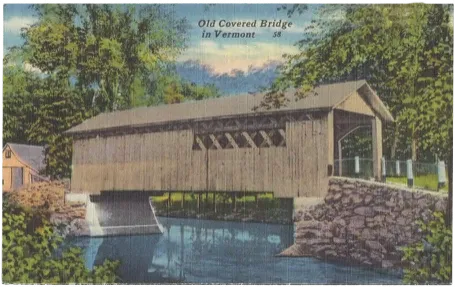
Clement took the opportunity to scout the property. The collapsed barn, fifty feet behind the house, was a ruin of rotted wood and rusted nails. Beyond it, the sugar maple forest pressed close, the trees tall and thick, their leaves filtering the afternoon sun into green, underwater light. He could see the covered bridge they had crossed on the way in — the Gismend Road Bridge — and, in the distance, the glint of the river.
He also noted the flower bed. The same one Nari had been sketching. Impossibly healthy, impossibly well-kept, surrounded by a ring of stones, in the shadow of a house where no one was supposed to live. Nothing about this place made sense — not the garden, not the man who hid bottles, not the boy who dug up roots in the forest. And somewhere beyond the sugar maples, in the deeper hills where Pasqualle had vanished, there were undoubtedly stranger things still.
Mauricio found Harry Higgins, and the two of them sat on the porch in the warm afternoon, speaking in low voices about the things young men speak of when they are far from home and far from supervision. Higgins, with a grin that never quite left his face, mentioned that moonshine flowed freely along the Canadian border. That a man could get his hands on almost anything out here, if he knew who to ask. They would just have to be careful around the priest. And the Swiss.
Inside, Blaine remained sequestered in his parlor, the door closed, his secrets — whatever they were — undisturbed.
And then, around three in the afternoon, the door opened. Blaine emerged, composed and smiling, and announced that he was taking everyone to Jim’s Grill in Cobb’s Corners for a late lunch. His treat. A gesture of goodwill from a man who, just hours ago, had claimed the only real bed in the house and hidden a bottle in his suitcase.
No one argued. They piled back into the cars and turned toward town.
None of them knew — not yet — what waited in Cobb’s Corners. A town like any other, perhaps. A general store, a diner, a sheriff’s office. The kind of place where nothing happens, or so the locals would have you believe.
The road ahead was narrow, and the afternoon was still young.
Next: The expedition enters Cobb’s Corners for the first time. Jim’s Grill awaits — and so do the people who call this town home.