
Protagonists
- Clement Scheidegger - FOC Representative, Mountaineer (Michalis)
- Narinder “Nari” Sodhi - Natural Sciences Student (Ioannis)
- Susan Chen - History Student (Konstantina)
- Sofia Picado - Chemistry Graduate Student (Istvan)
- Professor Lilian Neill - Anthropology Faculty (Tasos)
The Faces They Came Back Wearing
“The ones who were taken came back. But they sit wrong, and they speak wrong, and something inside them is trying very hard to behave.”
— Narinder Sodhi, on the train from Brattleboro
Summary
They were released from the cells at dawn and driven to the train station under the weight of Professor Harrold’s disappointment, which was heavier than any iron. The story was locked. Moonshine, drunkenness, a student prank gone too far. Sheriff Spencer’s report, Deputy Cutter’s corroborating testimony, and the calm, flat-voiced confirmations of the students themselves — every one of them returned, alive, unhurt, and wrong — sealed it into fact. Clement and Nari and Susan carried the truth like a stone in their chests: something had come down out of the fog on Broken Hill and taken their friends, and their friends had come back wearing the shapes of the people they had been. They could not prove it. No one would believe them. The head was gone. The buzzing had stopped. The only evidence left was the growing, grinding certainty that they were living among impostors — and that the impostors were watching them back.
Back at Miskatonic, the campus lay quiet and sunlit in the last weeks of summer, a cruel contrast to the dark of Vermont. Two new allies emerged from the ordinary rhythms of academic life: Sofia Picado, a Nicaraguan chemistry student who came looking for the boyfriend who had come back from the expedition speaking in an Irishman’s voice and broke off their courtship as though reciting a memo; and Professor Lilian Neill, the anthropologist who was meant to chaperone the expedition and went to Philadelphia instead, who found the priest who had taken her place standing in the university yard without his collar and without his memory of her. Together the survivors began to watch — to track the changed students through the Orne Library, to catalogue the books they read and the way they chewed their food and the way they sat in chairs as though the bodies they inhabited were suits they had not yet learned to wear. And Clement, following a thread of his own through the Science Annex and the English department, found the one man at Miskatonic who had seen these things before — a professor who locked his office door, reached for a bottle, and said: We’re not safe here.
- Professor Harrold, summoned by Nari’s call to her father, arrives at the Cobb’s Corners sheriff’s office angry and humiliated; he reprimands Clement and Nari in front of Sheriff Spencer, blames them for the expedition’s failure, and orders them onto the next train from Brattleboro.
- Nari defends herself with a devastating piece of logic — why would she have telephoned her father the day before if she had planned to get drunk that night? — but Harrold, embarrassed and eager to be gone, will not hear it.
- Susan arrives from the Gazette office; Harrold greets her with a casual racist remark about Chinese people, then dismisses the group entirely. They are to pack, leave, and never speak of this again.
- In the cells, Clement whispers to Nari: the ones who were taken and returned are not themselves. All of them are compromised. They must determine whether Susan is still Susan, and they must recover the book Father Cloutier had been carrying.
- Clement returns to the Maclearan farmhouse, finds Blaine outside kicking stones and muttering to himself, slips inside, and lures Father Cloutier out of his room with a lie; he steals the book from the priest’s open suitcase and escapes through the kitchen, where Jason Trent — once shy, once silent — calls out “What’s up, mate?” in a voice stripped of all awkwardness.
- At Brattleboro station, the changed students wait on the platform alongside the survivors; Clarissa Thurber sits with her legs wide and her hands behind the bench like a dockworker on a break, a posture no lady of their acquaintance had ever adopted. Harry Higgins watches the survivors with a smile that looks painted on.
- On the seven-hour train to Arkham, the changed students sit in eerie silence, staring forward, exchanging no words; they eat when food is available, cutting it with mechanical precision and looking at nothing while they chew.
- Susan and Nari share what they know: Mauricio, Block, Gibbons, and Clarissa were all snatched by the things in the fog. They came back. They are not the same. Something has replaced what was inside them, and the replacement is learning, clumsily, how to behave.
- The survivors arrive at Miskatonic on the night of August 19th. The semester does not begin until September 10th. There is a window — days of quiet, sunlit dread — in which to watch, to confirm, and to decide what to do.
- Sofia Picado, a chemistry graduate student from Nicaragua and Mauricio’s girlfriend, goes to his dormitory on August 23rd and finds a man who speaks with an Irish accent, refuses to look at her, and breaks off their relationship in flat, rehearsed phrases. She goes to Susan Chen’s room in a fury — and hears the truth.
- Professor Lilian Neill, the anthropologist who was supposed to chaperone the expedition, tracks down Father Cloutier outside the Orne Library; he does not recognise her, speaks as though stoned, wears no clerical collar, and is carrying a book on unusual aerial phenomena in New England.
- Professor Neill reports her concerns to Dr. Henry Armitage, the head librarian, who identifies the book as an obscure 1884 volume by a former Miskatonic professor — harmless in itself, but troubling in the hands of a priest who has stopped going to chapel. Armitage asks her to watch Cloutier and report anything further.
- Clement contacts Federated Oil and Chemical and learns that Higgins has reported finding pasquallium in a meteorite crater near Rice Hill — a claim that, if true, means the mineral is meteoric and not worth mining. Clement, who was on the geology team and knows there was no crater, confronts Professor Learmonth and is dismissed.
- Clement corners William Noakes lurking outside Learmonth’s office; the boy is wearing a suit instead of his farm clothes, claims to be looking for Professor Wilmarth, and when Clement accuses him, grabs Clement’s pointing finger with unnatural strength, says “I’ve seen stuff you wouldn’t even comprehend,” and walks away.
- Clement speaks with Higgins in the laboratory and discovers the class clown has lost his humour, his Irish accent, and his singing voice; the thing wearing Higgins’s face now speaks with a German accent and understands German perfectly when Clement tests him.
- Surveillance of the Orne Library reveals the changed students spend every waking hour there — ten in the morning until nine at night — reading occult texts, New England folklore, and comparative religion, never speaking to one another, eating their meals in mechanical silence. Jason Trent reads American Civil War histories with the rapt fascination of a man encountering the subject for the first time, muttering “Bloody hell” at intervals.
- Clement visits Professor Albert Wilmarth of the English department and mentions the expedition, the changed students, and the things he saw in the fog. Wilmarth’s eyes bulge. He locks the door. He confirms, in a shaking voice, that he has seen these things — two years ago, in Vermont. They kidnapped his friend Henry Akeley. And now, two years later, a student has come to his campus seeking him out and asking questions about his health that no one should know the answers to.
The Professor’s Disappointment
The cells opened in the morning light.
Sheriff Spencer turned the key with the unhurried finality of a man closing a file, and Clement Scheidegger and Nari Sodhi stepped out into the front room of the Cobb’s Corners sheriff’s office, blinking, stiff, unwashed. Jimmy Maclearan watched them go from behind his own bars and said nothing. The disinfectant smell had not improved overnight.
Professor Roger Harrold was waiting for them.
He sat on the bench by the window in the clothes he had driven through the night in — rumpled, unshaved, the collar of his shirt dark with sweat — and when they came out of the cells he did not stand. He looked at them the way a man looks at a debt he cannot pay, and his face carried the particular exhaustion of someone whose guilt over one disaster was being compounded, in real time, by a second.
He had driven through the night. Nari’s telephone call to her father in Arkham had reached him, and so had Blaine’s telegram, and the two messages had chased each other across Massachusetts and found him at his desk and pulled him out of bed and put him behind the wheel of a car for two hundred miles of dark road. What he had found, when he arrived, was his expedition in a jail.
Sheriff Spencer had given him the story. The students had been drinking. The moonshine had flowed freely. They had wandered off into the woods in the fog. They were making wild accusations to cover their own recklessness. The empty bottles were on the desk. Deputy Cutter, standing near the door with his small, tight smile, confirmed it. And then — the worst part, the part that closed the case — the students who had been taken had walked back into the office under their own power, alive and unhurt, and confirmed every detail. They had been drinking. They had wandered off. It would not happen again.
Mauricio, who had never stopped talking since the day he arrived at Miskatonic — who laughed too loud and asked too many questions and could not sit still for five minutes — had said only, We pushed it a bit, and smiled a small closed smile that did not reach his eyes, and said nothing else.
Harrold had looked at Clement and Nari through the bars and delivered his verdict, and now he delivered it again to their faces.
He could understand, he said, in a voice thick with the effort of control, this young lady getting drunk and wanting to have some fun. But Clement — Mr. Scheidegger — a man of his reputation, his position with Federated Oil and Chemical — such irresponsible behaviour. He had not expected it. He had not expected it at all.
Clement began to speak. He did not know what Blaine had told the professor, but Blaine was in charge of the expedition, and if anyone was to blame it was the man who had been entrusted with the students’ safety. Harrold cut him off. Don’t worry about that, Mr. Scheidegger. All of the students would be having a little talk with the Dean back at Miskatonic University. The appropriate actions would be taken. And this young lady — he turned to Nari — her father would be very disappointed.
Yes, Professor, Nari said. I’m terribly sorry. She held her burned hand against her chest, the rag blackened at the edges, and she meant the words, but not in the way he thought she meant them. She was sorry. She was sorry that the world had arranged itself so that the only man who could help them was the man least capable of hearing the truth.
What Nari Said
She tried once more.
She asked the professor to think — just for a moment — about the logic of the accusation. Why would she have telephoned her father the day before, to ask for help, to ask him to intervene, if she had been planning that very night to get drunk for the first time in her life and destroy everything? Would she have called him? Would she have asked him to come? Would any of this make sense if the story they were telling about her were true?
Harrold looked at her the way a man looks at a clock that has stopped. The argument was sound. The argument was unanswerable. And it did not matter, because the argument was being made by an Indian girl in a cell, and the counter-argument was being made by a sheriff and a deputy and seven calm-voiced students who all agreed on the same neat story, and the professor had driven two hundred miles in the dark and he wanted, more than anything, to go home.
Don’t worry about your father, he said. He will get informed about everything. And to Clement: You will have a discussion with the Miskatonic University president.
That was the end of it.
Susan Arrives
Susan Chen came in from the Gazette office across town, where she had spent the night on the editor’s couch with a blanket around her shoulders and the taste of fog still in her throat. She entered the sheriff’s office looking for her friends and found instead a professor who looked at her with the particular disdain reserved for people who had done exactly what he had been told they had done.
Oh, welcome, Mrs. Chen, Harrold said. I didn’t know that Chinese people were — and he trailed off into a remark about drinking that landed like a stone dropped into still water.
Susan, who had run through the fog from a farmhouse where things with claws had taken a priest off a roof, who had hammered on a newspaper editor’s door at midnight and told him everything, who had not slept and had not eaten and had walked across a town that pretended nothing had happened — Susan looked at the professor and smiled. It was a small smile, tight and private, the smile of a nineteen-year-old from Boston who had learned, growing up Chinese in a white city, exactly how much the opinions of embarrassed men were worth.
That’s kind of racist, Professor, she said.
Harrold, who was himself an immigrant, who had built his career on hard work in a country that had not invited him, did not blink. You won’t talk to me about racism, he said. I managed to get a professor’s position by working hard and studying hard. He told her to pack her things.
Harrold told them all to pack their things. They would take the next train from Brattleboro. The expedition was over.
What Was Whispered
While the professor arranged the departure, Clement drew Nari aside.
He spoke in the low, precise voice he used for information he did not want overheard, and what he said was this: they needed to know who was who. The ones who had been taken and had come back were not the same people. He was certain of it. All of them — Mauricio, Block, Gibbons, Clarissa, and the others — were compromised. Whatever had been inside them was gone, and something else was in its place, something that was wearing their faces and learning, day by day, how to use them.
Nari agreed. She had seen the same thing. She had watched Mauricio’s closed smile and Clarissa’s too-smooth movements and the way they all turned to look at Blaine at the same instant, as though listening for a signal no one else could hear.
And Susan — Clement looked at Nari. They needed to be sure. They needed to ask Susan questions only the real Susan would know, to confirm that she had not been taken, that she was still herself. And someone needed to go back to the farmhouse and retrieve the book — the book that Jason Trent had been reading, the book Father Cloutier had somehow acquired. It was evidence. It might be important. And Father Cloutier, whatever he was now, was not going to hand it over willingly.
Susan found them and spoke quickly, in a voice low and shaking. She told them what she had seen: Noakes, sent up a ladder by Blaine, screaming once and then silence. Father Cloutier climbing to the roof. Laslow standing in the fog with his eyes bulging and then simply not there. She had run. She had left Jason Trent behind — the boy had told her to keep running, an act of bravery that still puzzled her — and she had made it to the Gazette.
And then she said the thing that had been pressing against the inside of her skull since dawn.
Why do they say we’re drunk? she whispered. I saw them come back. They came back as if nothing happened. And now they’re all saying we were drinking.
Nari took her hand. She told her about the fog, about the things with claws and membranous wings, about the buzzing that had formed words in Mauricio’s ears. About the green mist. About trying to save them and failing.
All of them, Nari said. Mauricio. Block. Gibbons. Clarissa. They were taken. I witnessed it. I tried to save them. Her voice cracked on the last word but did not break. And now they’re back, and they’re blaming us, and they’re sitting there as if nothing happened, and something is very, very wrong with all of them.
They looked at each other — Clement, Nari, Susan — and the pact formed between them without anyone speaking it aloud. They knew. They could not prove it. No one would believe them. And they were about to be put on a train to a university full of the things that had taken their friends.
Clement went back to the farmhouse for the book.
The Book
Blaine was outside when Clement arrived, standing in the yard by himself, kicking rocks. His face was red. He was muttering under his breath, the words torn and jagged, addressed to no one. Clement could not make them out. He did not try. He moved past the man, keeping low, and slipped through the kitchen door.
The house was silent. The cheerful yellow-and-blue plaque — God bless our happy home — still hung above the sink, and the smell of last night’s rabbit lingered in the grease on the stove. In the rooms beyond, the students were packing. They moved without speaking, folding clothes into cases with the careful, mechanical precision of people following instructions they had memorised. Mauricio looked up as Clement passed the doorway. His face was blank. He said nothing. He looked back down at his suitcase.
Clement found Father Cloutier in the parlor — Blaine’s old room — bending over his own luggage. The book was there, on top of the case, its spine visible: a slim volume with an obscure title about unusual aerial phenomena. Clement did not have time to read it. He needed the priest out of the room.
Father Cloutier, he said, with the easy authority of a man delivering a message. Mr. Blaine was outside. He’s been asking for you. Said it was urgent.
The priest straightened. Did he? A pause. Okay. And he walked out, past Clement, through the door, leaving the book behind.
Clement took it. He slipped it into his coat, gathered what remained of his own gear, and made for the kitchen.
Jason Trent was sitting on the bench by the back door.
The boy who had been silent for the entire expedition — who had hidden behind thick glasses and thicker books, who had dug up mandrake roots in secret and run from Nari as though his life depended on it — looked up at Clement with an expression that was easy and open and wrong.
What’s up, mate? he said.
Clement stopped. The voice was the same. The face was the same. But the thing behind the eyes was a different animal entirely, and the casual ease with which it wore the shy boy’s face was worse than any snarl.
Keep up the good work, Clement said, and walked out the back door, and did not look back.
The Train
They took the cars to Brattleboro. The road south was the same road they had driven north five days ago — the covered bridges, the dark creeks, the woods pressing in — and it looked different now, smaller, ordinary, as though the landscape had been a stage set for something that had already been struck.
Harrold drove the survivors. Blaine stayed behind at the farmhouse with the biggest of the men — Roderick Block and William Noakes — to pack the instruments on Broken Hill and bring down the last of the equipment. They would follow the next day.
At Brattleboro station, the changed students were already on the platform.
They stood in a loose cluster, apart from the other passengers, their cases at their feet. They did not speak to one another. They did not read. They looked down the track in the direction the train would come from, and their faces had the smooth, patient blankness of people waiting for a bus.
Susan watched Clarissa Thurber.
Clarissa had always worn dresses — floral prints, modest hemlines, the careful presentation of a young woman whose father had fought to send her to university. She had been particular about it. She had been proud. And now she was sitting on a bench on the platform in a pair of trousers, her hands behind the backrest, her legs spread wide, one foot hooked over the other knee — the posture of a dockworker taking a break, or a man who was used to having something between his legs that was no longer there. She would never have sat that way. The woman who had sat that way would not have recognised her.
Susan nudged Nari. Look at her, she breathed. That’s not the same person.
Higgins stood a little apart, and when Susan glanced his way he was watching her — and his face broke into a smile that had no warmth in it, no music, none of the infectious Irish grin that had made him the life of every room he entered. It was the smile of a man who had learned what a smile was supposed to look like and was applying the technique.
The train came. They boarded. The changed students took seats together at the far end of the car, and for the next seven hours they sat in silence, staring forward, exchanging no words.
They did not talk. They did not read. They did not sleep. They existed, in the compartment at the end of the car, like mannequins in a department store window, arranged to look alive, fooling no one who looked closely enough.
Susan, Nari, and Clement sat together near the front and spoke in low voices. Clement told them about the book. Susan told them about the Gazette and the things she had seen at the farmhouse. Nari told them again about the fog, the claws, the buzzing.
They agreed on what they knew. The people at the end of the car were not their friends. Something had been done to them in the fog — something that had emptied them out and put something else inside, something that was still learning how to operate the machinery of the bodies it had taken. The replacement was clumsy. It sat wrong. It chewed wrong. It did not know how Clarissa crossed her legs or how Higgins laughed or what Trent’s shyness looked like. But it was learning. And it would get better.
What about last year? Susan whispered. The same thing could have happened then. Daphne Devine. Patterson. Jeffrey. They went missing. Blaine came back. He’s been here before — twice now. What if he was one of them before we ever went to Cobb’s Corners?
It was a thought that settled into the marrow. Blaine, who had watched Clarissa with obsessive attention to her body. Blaine, who had handed out the moonshine. Blaine, who had sent Noakes up the ladder and called the students out into the fog. Blaine, who had told Cutter the students got drunk and wandered off. If Blaine had been replaced a year ago — if the real Blaine had died on that hill in September ‘29 — then everything that had followed was a trap, baited and sprung, and they had walked into it with their eyes open and their mouths full of questions about folklore.
The train rocked south through the New England evening. At the end of the car, in the fading light, the shapes of their friends sat in patient silence, and did not speak, and did not sleep, and waited for Arkham.
Arrival
They came into Arkham late on the night of August 19th.
The platform was empty. The station lamp threw a yellow circle on the bricks. The air was warm and smelled of coal smoke and the river, and it was so ordinary, so aggressively ordinary, that Susan wanted to weep. The campus lay beyond the town in its late-summer quiet — the lawns clipped, the buildings dark, the semester still three weeks away. Students who had not been to Vermont laughed in parlours and on porches. A dog barked somewhere. The world was going on as though nothing had happened, because for the world, nothing had.
The changed students dispersed into the night without a word. They walked, singly and in pairs, toward the dormitories and the faculty housing, carrying their cases, and the darkness took them, and they were gone.
Clement went to Derby Hall. Nari and Susan went to Dorothy Upman Hall. They locked their doors. They did not sleep, or they slept badly, and the dreams — when they came — were of fog and buzzing and the sound of a tent being cut open like paper.
In the morning the sun was out. Classes did not begin until September 10th. There was time. Time to watch, to confirm, to gather what evidence could be gathered. Time to find allies, if any existed, among the faculty and the students of a university that believed they were drunkards and liars.
Time, too, for the things in their friends’ bodies to settle in, to learn the campus, to find the library and the laboratories, and to begin whatever it was they had come here to do.
The Girlfriend
Sofia Picado arrived at Mauricio Duarte’s door on the 23rd of August.
She was twenty-six, thin, fashionably dressed, with dark wavy hair and a smile that her family’s money had never quite bought her. She was a chemistry graduate student from León, Nicaragua — the second of three daughters, the one who had learned early how to fight for attention — and she had come to Miskatonic on her own terms. She had met Mauricio at the university the previous spring. He was from San Juan Cito, a neighbouring country, and his Spanish was excellent, and he had flirted with her in the library with the cheerful persistence of a boy who had never met a problem he could not talk his way out of. She had liked it. She had liked him. He was supposed to be gone a week.
Four days after the expedition’s early return, she had heard nothing. No call. No note. No visit. She went to the West Dormitory and knocked on his door.
He opened it. He looked at her. And the man who looked back at her from behind Mauricio Duarte’s eyes was not Mauricio Duarte.
He spoke with an accent — not Mauricio’s warm Central American lilt, not the Spanish they shared, but something clipped and northern and wrong. He told her, in flat, rehearsed English, that he had been busy. That he needed to study a great deal this year. That she was a bad influence. That they should keep some distance for a while. That it would be better if they did not see each other for a couple of weeks. He delivered these lines with the careful diction of a man reading from a script he had memorised but did not understand.
Are you drunk, or are you making fun of me? Sofia said.
If you talk like this with me, he said, it’s over between us.
And he closed the door.
She stood in the corridor. She was shaking — not with grief, not yet, but with the pure, incandescent fury of a woman who has been dismissed by a stranger wearing the face of someone she cared about. She turned and walked out of the dormitory and across the campus to Dorothy Upman Hall and hammered on Susan Chen’s door.
Who is it? Susan’s voice, muffled, cautious.
It’s Sofia. Let me in.
Susan opened the door a crack, looked left and right down the corridor, and pulled her inside. She locked the door.
And then, in the small cluttered room that smelled of pickled things and old books, Susan Chen told Sofia Picado everything. The fog. The things that came down out of it — pink, brain-like heads, claws the size of a man’s torso, membranous wings, no faces. The buzzing that spoke. The friends who were taken and who came back wrong. Mauricio, who had said yes to something that offered him eternal life, and who had walked back into the sheriff’s office the next morning with a closed smile and flat eyes and was not, in any way that mattered, Mauricio anymore.
Sofia listened. She did not disbelieve it. The story was insane, and it was also the only story that explained what she had just experienced in that dormitory corridor — the cold voice, the wrong accent, the mechanical delivery, the complete absence of the boy who had charmed her in Spanish in the library.
It’s going to be my mission now, she said. To save him.
Susan looked at her. We need to talk to Nari, she said. She was there. She’ll tell you the rest.
The Professor Who Was Not There
Professor Lilian Neill had been meant to go to Vermont.
She was thirty-nine, an anthropologist, the only Black member of the Miskatonic faculty — a fact of which her parents were inordinately proud and of which the university was, in its quiet institutional way, also proud, in the manner of an institution that prefers its firsts to be quiet. She had been assigned to chaperone the student expedition. She had prepared for it. And then a family crisis had sent her to Philadelphia instead, and Father Ludovick Cloutier — the French-Canadian priest who taught religion in the School of Natural and Revealed Religion — had gone in her place.
She had thought nothing of it at the time. A substitution. A routine change. She went to Philadelphia, she dealt with her family, she came back, and the expedition left without her and came back early, and there were whispers about moonshine and drunkenness, and she did not think about it very much, because she had her own troubles and the troubles of a handful of students in Vermont seemed very far away.
What brought her back to it was Father Cloutier himself.
She went looking for him. She had questions — why had the expedition returned so soon? What had happened? What had been found? She checked the chapel, where she had sometimes seen him at prayer, and he was not there. She asked after him. No one had seen him. And then, one afternoon in the last week of August, she came out of the Orne Library and found him standing in the university yard, holding a stack of books, and she walked up to him and said hello.
He looked at her.
He did not recognise her.
Hello, Father Cloutier, she said. I’ve been trying to reach you.
Yes, he said. I’m here. I’m back from Cobb’s Corners. How can I help you?
There was something wrong with his voice. It was Father Cloutier’s voice, the same timbre, the same Quebecois undertone — but the music of it was gone. The warmth. The gentle, shrewd attentiveness of a man who had spent decades listening to people more carefully than they listened to themselves. He spoke the way a man speaks when he is reading aloud from a page he has never seen before.
She asked him why the expedition had returned so soon.
Some students got drunk, he said. Professor Harrold came and the expedition had to return to Arkham early.
She asked about the findings. The folklore. The interviews.
Very interesting stuff, he said. Interesting.
She asked whether she should speak to someone else.
There was a pause — a pause that lasted a beat too long, as though the machinery behind his eyes was searching for the correct response in a file it had not yet finished indexing. You work at the university, right?
I’m a professor here, she said.
Of course I remember you, he said. And she knew, with the cold certainty of a woman who had spent her entire professional life reading the faces of people who were lying to her, that he did not.
She looked at his throat. He was not wearing his clerical collar. The cross he had always worn — the small silver cross he touched unconsciously a dozen times a day, the way other men touch a watch chain — was gone. He was standing in the university yard in shirtsleeves, holding a stack of books, and there was nothing about him that was a priest except the face, and even the face was not sure.
She glanced at the top book in his stack. The title, in faded gold letters on a dark spine: Strange Skies: An Account of Unusual Aerial Phenomena in New England, 1620–1880.
She thanked him. She walked away. She went directly to the office of Dr. Henry Armitage, the head librarian.
The Librarian
Dr. Armitage was seventy-three years old, sharp-eyed behind thick spectacles, with the guarded, slightly paranoid demeanour of a man who had seen something two years ago — something he did not discuss — that had rearranged his understanding of what books could do and what the people who wanted them might be.
Professor Neill told him about Father Cloutier. The changed behaviour. The missing collar. The book on unusual aerial phenomena.
Armitage opened a drawer, produced a list, consulted it. The book, he said, was by Professor Adolphus Renwick — a former Miskatonic man, College of Sciences, published in 1884. It was nothing special. A curiosity. It sat on the second floor. There was no reason a priest should be reading it, and no reason a priest should be carrying it through the university yard without his collar, looking like a man who had been drugged.
He’s not been to the chapel, Neill said. Not once since he came back.
Armitage considered this. He was quiet for a long moment. Then he said: Would you do me a favour? Keep an eye on him. If you see anything else — anything bizarre — come and tell me. That book is nothing to be afraid of. But if he starts carrying more books on that kind of subject, or if he tries to gain access to the Restricted Collection — and here his voice dropped, and his eyes were very hard behind the spectacles — he would have to come through me. No one gets in there without my authorisation. No one.
He asked her to watch, and to report, and she agreed.
The Suit and the Finger
Clement Scheidegger’s first call was to Federated Oil and Chemical.
He told them what had happened — or rather, he told them the version that could be told: a misunderstanding with local law enforcement, an early termination of the expedition, a regrettable inconvenience. He left out the fog, the claws, the buzzing, and the green mist. He left out the head. He left out Mauricio’s yes. Some things could not be said over a telephone line to a corporate office in New York, because the men on the other end would stop returning his calls.
What FOC told him, in return, stopped him cold.
Professor Learmonth had called them. One of the students — Harry Higgins — had reported finding a sample of pasquallium in a crater near Rice Hill. The sample had been analysed. It was meteoric. Which meant that pasquallium was not a mineral hidden in the hills of Vermont, waiting to be mined. It was a fragment of a meteorite. A coincidence. A dead end. Federated Oil and Chemical’s investment in the Vermont expedition had been, from a commercial standpoint, a failure.
Clement hung up the receiver and sat with the information for a long moment.
He had been on the geology team. There had been no crater near Rice Hill. He had not been informed of any pasquallium find. And Harry Higgins — the class clown, the singer, the boy whose Irish accent was as much a part of him as his grin — had walked into Learmonth’s office and delivered, in a calm professional voice, a piece of geological analysis sophisticated enough to convince a professor of metallurgy that the expedition’s central discovery was worthless.
He went to see Learmonth.
The professor was in his office in the Science Annex — a large, distracted man with six fingers on his right hand, born with the extra digit and proud of it, who had spent twenty years building the geology department and the FOC partnership that funded it. He listened to Clement’s protests with the weary condescension of a man who had already made up his mind.
Mr. Scheidegger, he said. Do you think a man of my stature would drink that moonshine trash that you people drink up there? Traditional beer, in a tankard, yes. But not that. That’s toilet cleaner. He smiled the thin smile of a man who considered the conversation over. Probably that’s why you don’t remember anything.
Clement stood. He was fifty-two years old, a combat veteran and a mountaineer, and he had carried a severed head through a forest and sat in a cell while his friends walked past him with empty eyes, and he was not going to be lectured about toilet cleaner by a man who could not see what was happening in his own laboratory.
Who put Mr. Blaine in charge? Clement said. A twenty-year-old boy ran this whole expedition. He wasn’t even able to protect you from his own bottle.
I don’t like the tone of your voice, sir, Learmonth said.
Clement left. He would come back to Learmonth. There was a more pressing encounter to be had first.
William Noakes was loitering outside Learmonth’s office when Clement emerged — standing in the corridor in a shirt and tie and a pressed suit, pretending to examine the wall, and doing a very poor job of it. The boy from the Arkham farm, who had always worn rough clothes and checked his father’s pocket watch a dozen times a day, who had been helpful and kind and outgoing and as honest as the day was long — that boy was gone. The thing in his body looked wrong in the suit, like a man wearing a costume, and when it saw Clement it started to walk away with studied casualness.
I can see you over there, Clement said. His voice was hard and flat. You’re not hiding properly.
Noakes turned. What are you talking about? You know I’m William Noakes.
What are you doing there? Are you watching me?
No, of course not. I was looking for Professor Wilmarth.
Clement looked at him. The thing behind the boy’s face was calm. Too calm. The real Noakes would have stammered, would have grinned, would have pulled out the pocket watch and checked it out of nervous habit. This one did none of those things.
I know what you did, Clement said. I’m going to find out what you’re doing. I’m going to uncover all of this. Do you understand?
The thing in Noakes’s body reached out and took Clement’s pointing finger in its hand. The grip was iron — the grip of a man who had worked a farm his whole life, or of something that did not know its own strength and did not care. It held the finger for a moment, and its face was very close, and its eyes were empty.
I’ve seen stuff you wouldn’t even comprehend, it said. So give me a break.
It released the finger, turned, and walked away down the corridor.
Clement stood in the empty hallway outside Learmonth’s office and looked at his hand. The finger was white where the grip had been. He was a strong man. He had climbed mountains. And that boy — that farm boy, that helpful, kind, pocket-watch-checking boy — had taken his finger as easily as a man takes a pencil from a child.
The Reading Room
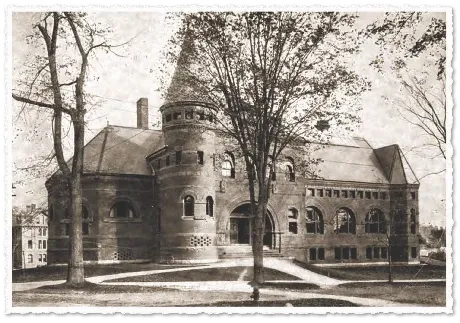
The Orne Library was the heart of the campus — a broad, handsome building of dark stone, its reading rooms lined with oak and brass, its basement holding the newspaper archives, its upper floors guarded by Dr. Armitage and the locked doors of the Restricted Collection.
It was also, the investigators discovered, where the changed students spent every waking hour.
They arrived at ten in the morning. They left at nine at night. In between, they sat — Block, Gibbons, Trent, Laslow, Mauricio, and Father Cloutier — at tables scattered across the reading rooms and the basement archive, reading. Always reading. Never the same book twice, but always the same subjects: New England folklore. Abenaki history. Witchcraft and demonology in the Connecticut River Valley. Comparative religion. The occult.
Susan and Nari and Sofia, separately and together, took seats at a distance and watched.
The books moved through their hands in a steady procession. Legends and Folklore of the Green Mountains, by Ezekiel Harlow, 1894. The Golden Bough, Sir James George Frazer’s vast study of comparative religion, in its multiple volumes. Isis Unveiled, H.P. Blavatsky’s theosophical doorstop, 1877. A History of the Abenaki People of Northern New England, by Reverend Josiah Planckett, 1812. Witchcraft and Demonology in the Connecticut River Valley, by one Dr. Caleb Danforth, 1859. They read methodically, thoroughly, with the patient hunger of students preparing for an examination — except that no professor had assigned this curriculum, and no examination was scheduled, and the subject was the same dark vein of New England lore that the folklorists had been mining in Cobb’s Corners.
They did not speak to one another. They did not share notes. They sat at separate tables, sometimes on separate floors, and read. When they finished a book, they returned it to its shelf and took another. They never attempted to check anything out. They never tried to carry a book past the front desk. They left everything where they found it, as though they were memorising the library’s contents rather than removing them.
At lunch, they went to the dining hall together. Susan and Sofia followed at a distance and watched them eat.
They ate the way they did everything else: mechanically, precisely, without pleasure. They cut their food into uniform pieces. They chewed with the measured rhythm of a metronome. They looked at nothing while they chewed — not at their plates, not at each other, not at the room. When the food was gone, they stood up, left their trays, and walked back to the library in single file, without exchanging a word.
And then there were the individual tells — the small, specific wrongnesses that, once noticed, could not be unnoticed.
Jason Trent, who had been the shyest boy any of them had ever met — who had hidden behind his glasses and refused to speak to women and had run from Nari in the woods as though she had caught him stealing — sat in the history section reading about the American Civil War with the rapt, wide-eyed fascination of a man encountering the material for the first time. He turned pages quickly. He leaned forward. And at intervals, alone at his table, he would slam a book shut and mutter, in a voice pitched just loud enough to carry: Bloody hell! He was learning American history. He was learning it as though it were foreign to him, as though the continent itself were a thing he had never encountered before, and the discovery of it filled him with a wonder that the real Jason Trent had never felt about anything.
Terrence Laslow sat at a table near the window and did not read. He held a book open in front of him and turned pages at appropriate intervals, but his eyes were not on the text. They were on the room. They moved slowly from face to face — from student to student, from librarian to visitor — and when they settled on someone, they stayed. His expression, when he looked at you, was a smile that was not a smile: a pulling back of the lips, a narrowing of the eyes, the look of a man sizing up a piece of meat.
And Clarissa.
Sofia found her outside the library during a break, standing with her back to the door, wearing trousers — trousers, on Clarissa Thurber, who would not have been caught dead in them a week ago — and she was spitting on the ground. She spat like a man clearing his throat after a chew. And then, as Sofia watched, she reached down and adjusted the waistband of the trousers with the awkward, fumbling urgency of someone wearing clothes that did not fit the body’s architecture, tugging and shifting as though trying to accommodate an anatomy the trousers had not been designed for and the wearer had not yet learned to manage.
Sofia approached. Hola, Clarissa.
Clarissa turned. Hello. The voice was coarse. The lisp was gone. The careful diction of a young woman who had fought her father for the right to be educated had been replaced by something blunt and masculine and utterly foreign to the face that produced it.
Sofia asked about the expedition. She asked whether Mauricio had cheated on her — Did he find a farm girl in Cobb’s Corners? You can tell me, we’re good friends — and Clarissa leaned forward and said, with a leer that had no business on a woman’s face: Yeah, he found a farm girl. He cheated. She’s a whore.
And then Sofia, thinking quickly, thinking of what Susan had told her, asked a question that a woman would have been able to answer without thinking. She asked about the time of the month — what did Clarissa do, how did she manage, what did she use?
Clarissa stared at her. The machinery behind the eyes churned. What do you mean, what do I do? The voice was confused. Genuinely confused. As though the question had been posed in a language the thing behind the face had not been issued a translation for.
Pads, Sofia said. Do you use pads?
A pause. A long, searching pause. And then: I don’t know what you’re talking about. And Clarissa turned and went back inside, leaving Sofia standing on the library steps with the cold certainty settled in her chest like a stone: whatever was wearing Clarissa Thurber’s face, it did not know what it meant to be a woman. It did not know because it was not one. It was something else, something that had been put inside the body of a twenty-year-old chemistry major and had not been given the manual, and it was doing its best to operate the machinery, and it was failing, in small and specific ways, and if you watched long enough, if you asked the right questions, you could see the seams.
The Man Who Has Seen Them Before
Clement’s last stop of the day was the office of Professor Albert N. Wilmarth.
He had heard the name from Noakes — the thing in Noakes’s body had been looking for Wilmarth, had been seen loitering outside his office and his classroom — and Clement had filed it away. The English department. A literature professor. A man who, according to the campus directory, was a member of the Arkham Historical Society. There was no obvious reason why a farm boy from Arkham should be seeking out an English professor with such persistence, and no obvious reason why the seeking should make the boy nervous. Clement intended to find out.
Wilmarth’s office was on the second floor of the humanities building — a small, cluttered room, books piled on every surface, a single window looking out over the quad. The man himself was slight, clean-shaven, sharp-featured, with thinning brown hair and thick spectacles behind which a pair of very alert eyes moved with the restless vigilance of a man who had been startled once, badly, and had never quite stopped being startled.
Clement knocked and was admitted. He introduced himself — FOC representative, guest of the university, recently returned from the Vermont expedition — and mentioned that a student named Noakes had been looking for the professor.
Wilmarth’s eyes changed.
Noakes, he said. Yes. That tall, muscular fellow in the suit. He keeps finding me. He won’t leave me alone. He’s a weird guy. He paused. He told me things he shouldn’t know. He asked about my health. How is my foot doing, after that accident? Another pause. He never knew about any accident. He seems happy to see me. He’s a weirdo. And now you come and tell me about Vermont.
Clement mentioned the changed students. The strange behaviour. The accents — one of them, Higgins, was now speaking with a German accent and understanding German perfectly when Clement tested him. And then, because Wilmarth’s face had gone very still and very pale, Clement told him what had happened in the fog.
He described the things. Human-sized. Pink, brain-like heads, the surface shifting with colours that moved in synchrony. Dark-red claws, chitinous, the size of a man’s torso. Membranous, translucent wings, veined, catching the colours and refracting them. Too many legs. No face. The buzzing that formed words.
Wilmarth stood up.
He crossed the room in two quick strides. He closed the door that Clement had left slightly ajar. He locked it. He came back to the desk, and he was shaking, and his eyes behind the thick spectacles were the eyes of a man who has been carrying something alone for two years and has just heard it described, in perfect detail, by a stranger.
Translucent wings, Wilmarth said. Many legs. Two huge claws. And a face — a face that looks like a brain. Pink.
Yes, Clement said.
We’re not safe here.
The words came out in a whisper. Wilmarth’s hands were on the desk, pressing flat, as though he were holding himself down against a current that wanted to sweep him away. He had seen these things. Two years ago. In Vermont. The same hills, the same fog, the same shape in the dark.
They kidnapped my friend, Wilmarth said. Henry Akeley. They got him.
Did he come back? Clement asked. Changed? Like —
No. Wilmarth’s voice was barely audible. No. He didn’t come back at all.
He reached into his desk and produced a pistol — an illegal thing, a concealed weapon on a university campus, carried by a professor of English literature who had survived something in the Vermont woods and had never since felt safe without it. He handled it the way a man handles a talisman: not as a tool he expected to use, but as an object whose presence in his pocket had been, for two years, the only thing between him and the certainty that they would come for him again.
I carry this all the time, he said. It’s illegal. I know. It didn’t help. I shot one of these things — many times, multiple times — and the bullets just passed through. Just went right through. It’s worthless.
He set the gun on the desk. His hand was shaking.
We can get dynamite, Clement said, because he was Swiss and practical and when a gun did not work you found a bigger gun. We can say it’s for fishing. Keep a couple of sticks with us at all —
Are you insane? Wilmarth grabbed the front of Clement’s shirt. His fingers were tight, his face close, his voice cracked and ragged. I was a captive. I managed to get away. But you don’t want to get close to these things. You don’t —
He stopped. He released the shirt. He stepped back. He pressed his hands flat on the desk again and stood there, breathing hard, and the silence in the locked office was the silence of a man who had been carrying a weight for two years and had just felt, for the first time, the presence of someone else who understood what the weight was.
Clement poured him a drink from the bottle on the shelf. He set it in front of the professor. He sat down in the chair across the desk, the chair meant for students, and he folded his hands, and in the calm, steady, precise voice of a man who had survived the Alps and a war and a valley in Vermont where the dead were crowned on rocks, he said:
Tell me everything.
And Professor Albert Wilmarth, who had not told anyone the full story of what had happened to him in the hills above Townshend, Vermont, in the summer of 1928 — who had buried it and carried it and let it eat at the edges of his sleep for two years — sat down across from a Swiss mountaineer he had never met before, and began to talk.
Outside the locked door, the campus went about its business. Students crossed the quad in the late-summer sun. The Orne Library was open, and in its reading rooms the changed students sat with their books, turning pages, memorising the contents of a collection they would, on a night still weeks away, come to empty. In the Science Annex, the thing wearing Harry Higgins’s face stood over Professor Learmonth’s samples and spoke in a German accent about meteorites, and Learmonth, who had six fingers on his right hand and twenty years of building something he was proud of, nodded and took notes and did not yet know that his brain was marked.
Next: The Dean’s reprimand. Wilmarth’s full account. The slow, careful work of watching, cataloguing, and confirming — building a case no court would hear against enemies no one believed existed. And Blaine, drinking himself hollow in a room he cannot afford, knowing what he did and knowing, too, that the thing he served is not finished with him yet.